
I’d Seen This Before — in War Zones
This January 6 insurrection reflection begins overseas. In 2010, I was in Iraq during their parliamentary elections. By dawn, the city already shook with explosions. Insurgents were striking polling stations and election offices — mortars, suicide vests, gunfire — trying to make democracy look weak and ungovernable. Our opinion section frequently explores these themes.
Four years later, in Afghanistan, I saw the same script again. The Taliban called the presidential election a “Western sham” and vowed to kill anyone who took part. They bombed schools being used as polling places, assassinated sitting officials, and blew apart provincial offices that represented even a flicker of democratic legitimacy.
I remember watching villagers line up anyway, terrified but resolute, ink-stained fingers trembling as they cast their votes. That was courage — defying violence for the simple act of self-governance.
So on January 6, 2021, when I saw Americans storm their own Capitol to stop a peaceful transfer of power, I felt sick because I’d seen this playbook before. The same justifications. The same delusions. The same hatred of institutions.
The flags were different. The accents were familiar. Every honest January 6 insurrection reflection must confront this parallel. But the intent — to seize power through fear — was identical.
The Data Doesn’t Lie: Our State Was There
In the years since, I’ve pored over court documents and datasets of 53 North Carolinians charged in the Capitol attack.
They came from Charlotte, Sylva, Raleigh, small towns you’ve never heard of. Veterans. Small-business owners. Parents. Retirees. They wrapped their rage in red, white, and blue, and called it patriotism.
Most of them claimed political or ideological motives. Some were linked to groups like the Oath Keepers or the Proud Boys. Others just followed the noise.
The sentences varied wildly — a few months here, a couple of years there. The justice system, strained and politicized, seemed unsure whether to treat them as rioters or revolutionaries.
But the data told a consistent story: this wasn’t random unrest. It was organized anger, networked through ideology, fueled by lies, and executed in plain sight.
We Called It Terrorism Overseas
- In Iraq, when a group stormed a government building to disrupt an election, we called it terrorism.
- In Afghanistan, when militants assassinated officials and bombed provincial offices, we called it an insurgency.
Here, on January 6, we called it “a protest that got out of hand.”
That euphemism — that desperate need to soften the truth — is what still keeps me angry.
Because once you’ve seen what the death of democracy looks like, you recognize the early symptoms. You know what it means when people start calling journalists “enemies of the people.” When elected officials minimize violence to protect their base. When truth becomes just another political talking point.
January 6 was not chaos. It was an organized attempt to overturn legitimate power through violence. This January 6 insurrection reflection demands we never forget that truth.
The Final Betrayal
Then came the pardons.
Watching people who had smashed windows, beaten police officers, and defiled the People’s House walk free was like watching the rule of law dissolve in real time. The same politicians who once swore to uphold the Constitution were suddenly calling the attackers “patriots,” “hostages,” even “heroes.”
It was the same trick I’d seen extremists use abroad — recasting the guilty as martyrs. Rebranding violence as righteousness. Turning shame into fuel.
That’s when I realized January 6 never really ended. The mob may have left the Capitol steps, but the movement just put on business attire and ran for local office.
January 6 Insurrection Reflection: Why I’m Still Mad
Some people tell me to move on. “It’s been five years,” they say. “Let it go.”
But that’s not how accountability works. You don’t move past an open wound; you clean it, or it festers.
I’m still mad because I know what happens when democracies let extremists rewrite the story. I saw it in Iraq when bombed-out voting centers became ghost towns. I saw it in Afghanistan, where entire provinces fell.
And I see it here — in the conspiracy theories that still circulate, in the politicians who wink at sedition while pretending to defend the flag.
Anger, in this case, isn’t bitterness. It’s vigilance. Its memory refusing to die.
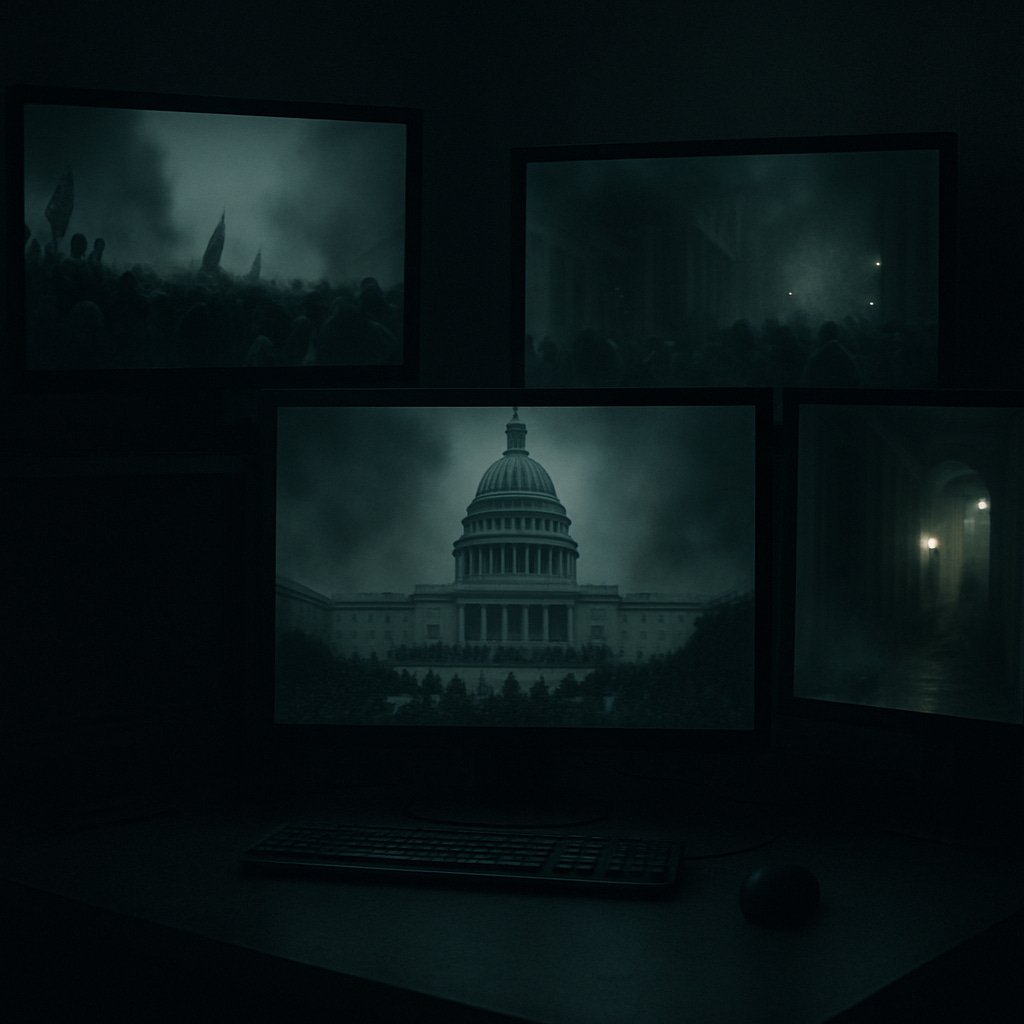
The Screens Still Glow
Five years later, writing this, the same feeds that once carried chaos from the Capitol now carry smaller storms closer to home.
Lately, I’ve seen it in our own town’s politics — the same fear, just wearing a local face. “Wake Forest Matters” has chronicled it: the drag-show panics, the coded xenophobia, the whisper campaigns against neighbors. When I read posts smearing a candidate because of his faith or heritage, I hear echoes of the same authoritarian reflex I’ve seen in Iraq, in Afghanistan, in D.C. on January 6 — the instinct to control through fear, to weaponize belonging.
Democracy doesn’t die in one explosion; it decays through habit. Through the quiet expectation that fear is normal.
Wake Forest isn’t Washington. But the patterns rhyme. And if we’ve learned anything from that day five years ago, it’s that the next attack on democracy won’t need barricades or bayonets — just silence.
A Call to Conscience
Today is Election Day.
Almost five years after a mob tried to overturn one, we each get the quiet chance to defend democracy the only way that ever really worked — by showing up.
I’ve seen what happens in countries where people lose faith in that process. I’ve watched ballots replaced by bullets, debate replaced by fear. And I’ve learned that democracies don’t collapse when enemies attack them — they collapse when citizens stop defending them.
So go vote. Vote even if you’re disillusioned, even if you think it doesn’t matter, even if the noise and cynicism make it hard to care. Vote for decency, for accountability, for memory. Vote because the people who stormed the Capitol hoped you wouldn’t.
The story of January 6 isn’t finished. Neither is the story of this country.
Every ballot is another chance to prove that the republic still stands — because enough of us still care to keep it standing.
Be vigilant. Be brave. Be loud. And above all — vote.
Tom Baker IV is the publisher of Wake Forest Matters, Wake Forest’s only independent local newsroom. A Wake Forest native, Navy veteran, and intelligence professional, Tom launched Wake Forest Matters to bring serious accountability journalism to his hometown. Tips and story ideas: publisher@wakeforestmatters.com