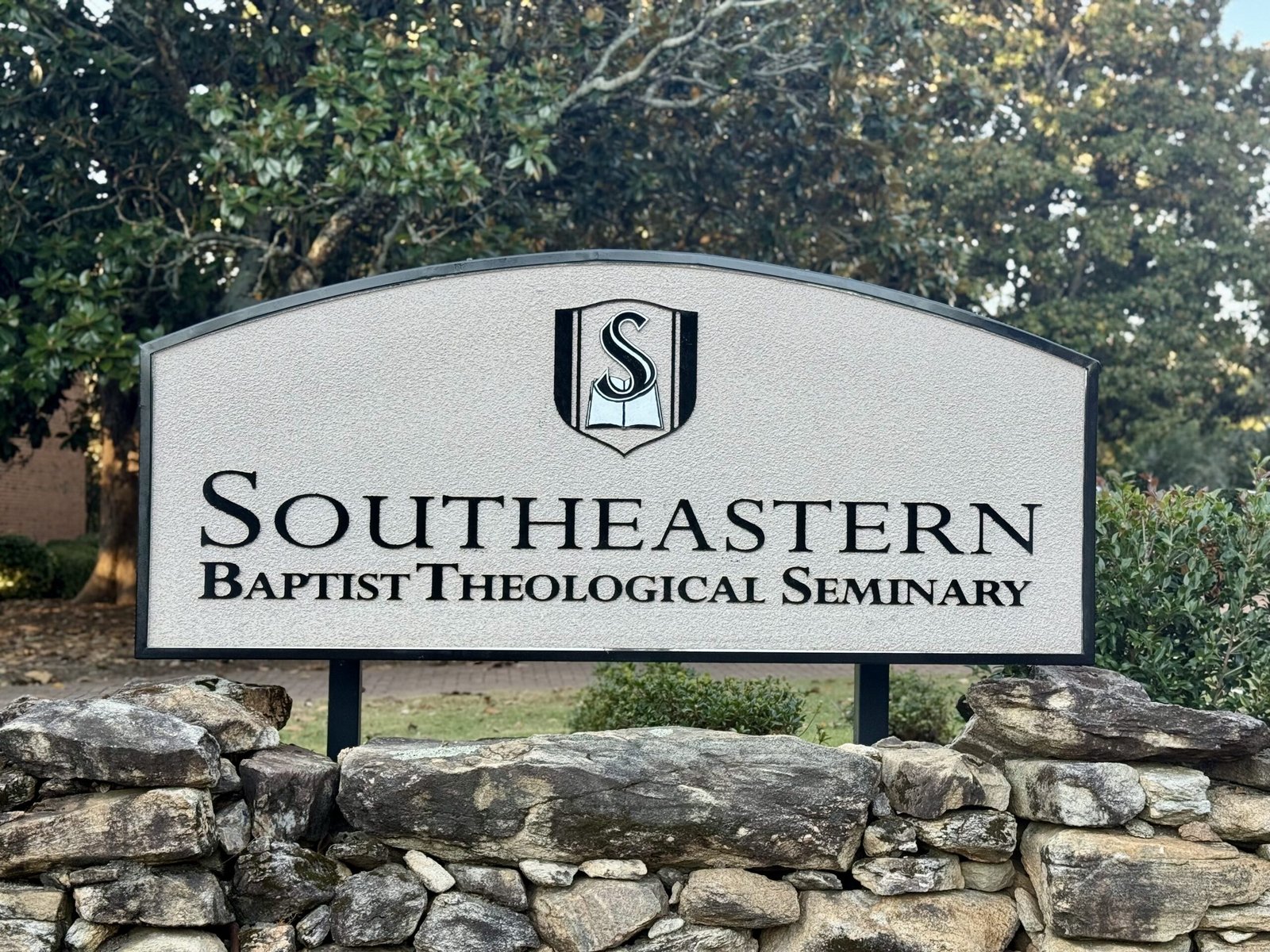
Photo: Wake Forest Matters, October 16.
Dr. Danny Akin, who’s been president of Southeastern Baptist Theological Seminary (SEBTS) since 2004, just announced he plans to retire on July 31, 2026. He’s been a significant presence here in Wake Forest and one of the longest-serving leaders at SEBTS, so this marks an important change for both the seminary and the community.
What could shift under new leadership, and how might it impact our town, state, and even national dynamics?
This overview explores why the seminary’s leadership transition matters so much. Southeastern is not just a quiet academic enclave; it is a powerful institution with deep connections and political and social capital at multiple levels. Locally, the seminary has helped shape the character and policies of Wake Forest for decades. Historically, Wake Forest used to be a dry town, primarily due to the community’s conservative Baptist roots. Local leaders moved to modernize many policies over the decades, reflecting a gradual shift in the town’s culture as it has grown.
In these local debates, the seminary has often been a key voice. Just last year, when Wake Forest planned its first-ever LGBTQ Pride fest, seminary officials expressed their preference that the event not be held. The event proceeded with town approval, but the incident highlighted how Southeastern sometimes uses its social capital to slow or impede changes that seminary leaders view as contrary to their values.
At the state level, Southeastern’s influence is evident through alumni and networks. The seminary has trained numerous pastors and Baptist leaders across North Carolina, some of whom have stepped directly into politics.
For example, Rev. Mark Harris, who earned his Master of Divinity and Doctor of Ministry at Southeastern, became a prominent figure in national politics. As president of the North Carolina Baptist State Convention in 2012, Harris led the successful campaign for Amendment One, a state constitutional amendment banning same-sex marriage. That victory elevated him onto the national evangelical stage, and he was invited to Washington to speak at a Family Research Council conference aimed at mobilizing pastors in the public square. Harris later ran for U.S. Congress, aligning closely with conservative leaders up to the White House. His trajectory from seminary graduate to political candidate exemplifies how Southeastern’s graduates turn the school’s influence into policy that affects us all.
The seminary’s leadership is also interwoven with the wider Southern Baptist Convention, which remains a potent force in political advocacy on issues like abortion, religious liberty, and education policy. Southern Baptist leaders, operating in the same circles as Southeastern, celebrated the U.S. Supreme Court’s 2022 decision overturning Roe v. Wade as a long-awaited victory, and they continue to push for restrictions on abortion in numerous states.
At the national level, Southeastern Seminary’s connections reach into the highest echelons of government. While the school itself is not partisan, its leaders and alumni often engage with prominent officeholders. The seminary is part of a broader network of evangelical institutions that have, in recent years, been courted by policymakers. In 2023, Southern Baptist Mike Johnson was elected to be Speaker of the House, making him third in line of succession to the Presidency. In 2018, U.S. Vice President Mike Pence addressed the SBC Annual Meeting. Southern Baptist figures, such as past SBC president Jack Graham, sit on federal religious advisory boards. Issues championed by Southeastern’s community, from opposition to LGBTQ+ rights to the promotion of “biblical worldview” education, have found sympathetic ears among lawmakers and judges. These are just a few of the examples reflecting the close ties between Southern Baptist leaders and the Trump administration.
All of this underscores that Southeastern’s upcoming leadership transition is significant. The incoming president will inherit not only an academic institution but a platform of considerable influence. Will the next leader maintain Akin’s approach of engaging issues mostly diplomatically, or take a different tone? Akin is credited with steadying Southeastern after a highly turbulent period when his predecessor, Paige Patterson, quickly moved SEBTS toward a more hardline stance. Under Akin, Southeastern grew, diversified its faculty and student body, even as it remained theologically conservative.
Now, with Akin departing, locals are asking questions:
Will the new president engage in cultural and political activism off campus, potentially putting the seminary on a collision course with the town?
Or might a new leader foster deeper cooperation and understanding between the seminary and a fast-growing, increasingly diverse Wake Forest community?
On the state and national stage, observers likewise wonder if Southeastern’s next chapter will amplify its voice in the culture wars. Each scenario carries implications for local policies, state politics, and the broader climate in America.
Southeastern Seminary is more than just a neighbor down the street; it’s a force that has helped shape past and present – and its next leader will help shape the future of our town.