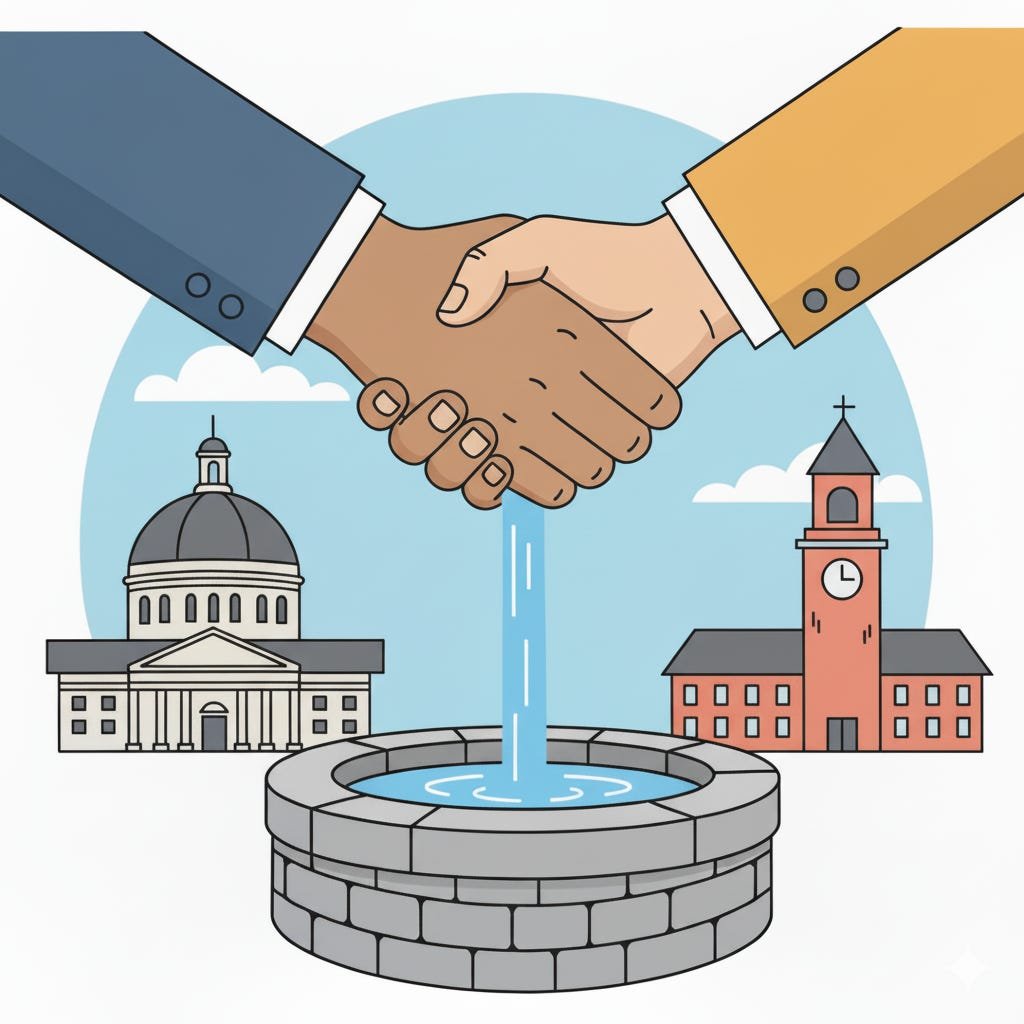
When institutions & the community work together, resources flow into a common well, benefiting everyone & strengthening the town. It’s about mutual benefit & shared responsibility, ensuring a just and equal contribution to our collective future.
A Wake Forest PILOT SEBTS fair share partnership could transform local revenue. As we search for a more balanced and fair revenue mix, one local partnership stands out as a clear, untapped opportunity. Large, centrally located, tax-exempt landholders are vital parts of our community. Still, they use town services—police patrols, fire response, and roads—every single day, without contributing to the property tax base that funds them.
Let’s be specific. Wake Forest Matters conducted an audit of 18 key parcels owned by Southeastern Baptist Theological Seminary (SEBTS). The total assessed value of this land in 2024 is approximately $114.85 million. If this land were fully taxable at current rates for the Town ($0.42), Wake County ($0.5135), and the applicable Downtown MSD ($0.14), it would generate between $1.07 million and $1.23 million in annual local revenue.
The Town of Wake Forest’s share of that hypothetical bill would be approximately $482,000 per year.
How a PILOT Agreement Would Work
To be crystal clear: this is not a proposal to tax a religious institution. We are proposing a voluntary Payment In Lieu of Taxes (PILOT), a fair-share contribution explicitly dedicated to the public safety and street maintenance services that directly serve the property.
Offer a community-benefits credit of up to 50% of that request, acknowledging the positive social, educational, and cultural contributions the institution makes.
Start with a two-year ramp-up, add an annual CPI escalator (capped at 3%), and publish a yearly report showing calls for service, funds received, and how those funds were spent.
This model already works in North Carolina. In Durham, Duke University makes direct annual payments of about $4 million to support fire and EMS services. This is proof that service-based contributions are a viable, collaborative tool.
A PILOT won’t solve our entire budget, but it will make the system significantly fairer. It is a concrete, achievable step that provides a new revenue stream for essential services, protects homeowners from bearing an imbalanced burden, and builds a stronger partnership between the Town and its most prominent institutions.
Tom Baker IV is the publisher of Wake Forest Matters, Wake Forest’s only independent local newsroom. A Wake Forest native, Navy veteran, and intelligence professional, Tom launched Wake Forest Matters to bring serious accountability journalism to his hometown. Tips and story ideas: publisher@wakeforestmatters.com