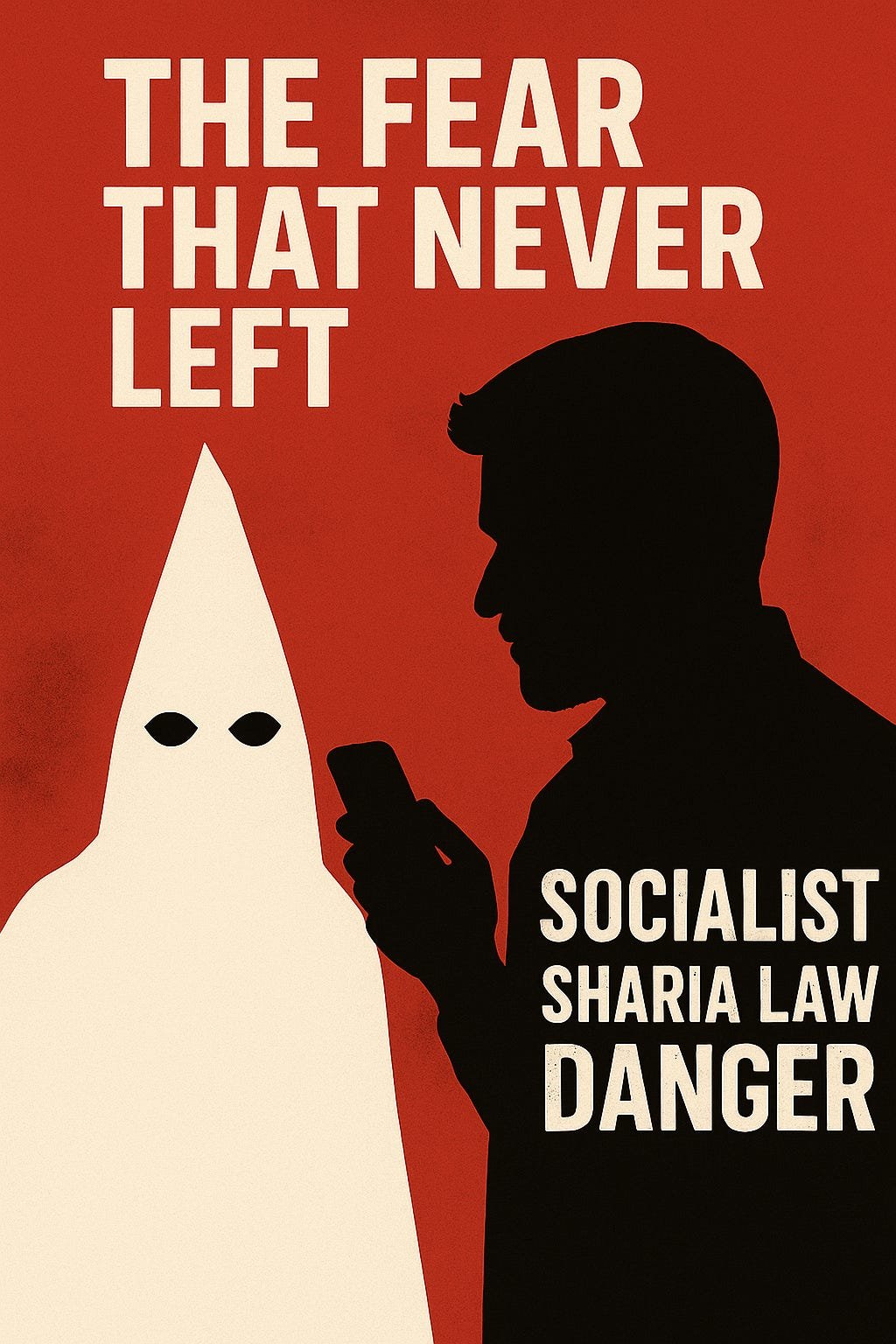
The Wake Forest authoritarian drift threatening our town squares demands vigilant civic engagement from every resident.
It’s easy to imagine authoritarianism as a distant threat, something that happens in broken states or under military regimes. But its logic is already visible, in our neighborhoods, in our campaigns, and in the digital spaces where civic life now unfolds.
Across the country, and yes, in our own town we are witnessing a troubling political pattern: harassment and intimidation as tools of enforcement. What was once disagreement has become discipline. Candidates aren’t just being opposed. They’re being punished, not only for who they are, but for refusing to toe the party line.
This is no longer about policy differences. It’s about ideological control.
While candidates from marginalized backgrounds including Muslim, Jewish, queer, immigrant, and Black, often face attacks based on identity, the culture of harassment has grown far beyond those boundaries.
Increasingly, even candidates within a political party are targeted for straying from strict orthodoxy. One wrong vote. One gesture of bipartisanship. One public statement that isn’t perfectly in sync, and suddenly, the party machinery turns on them.
They’re branded as traitors. Mocked on social media. Disavowed by former allies. Harassed by anonymous accounts and sometimes by their own party’s infrastructure.
These behaviors and tactics immediately bring to mind what Ray Bradbury warned in Fahrenheit 451 (1953):
“We must all be alike. Not everyone born free and equal, as the Constitution says, but everyone made equal. Each man the image of every other…”
In Bradbury’s dystopia, the goal wasn’t liberty — it was sameness, safety through conformity. That’s the same pressure we’re seeing now: a demand for ideological uniformity, enforced not by firemen, but by digital mobs, party loyalists, and weaponized shame.
When fear becomes the cost of public service, and harassment becomes normalized as “free speech” and “debate,” we’re not just drifting, we’re actively participating in the erosion of our civic life.
This is not debate. It’s enforcement.
A System That Disciplines All Difference
This kind of political culture doesn’t just marginalize outsiders, it polices insiders. It trains candidates to think twice before speaking freely, to self-censor, to vote not based on conscience or constituency but on fear.
It creates a civic environment where dissent is betrayal, and loyalty means silence.
This is a hallmark of totalitarian thinking, not just the exclusion of those who “don’t belong,” but the punishment of anyone who refuses to conform completely.
Totalitarianism, Localized
Hannah Arendt’s warning in The Origins of Totalitarianism was not that tyranny always starts from above, but that it often grows from below, in the ways we begin to expect purity from our peers, in the ways we turn against each other for thinking differently, and in the ways fear replaces freedom in public discourse.
What we see in our town elections is not isolated toxicity. It’s the early architecture of authoritarianism:
A culture of compliance, where deviation is dangerous.
A playbook of harassment, where shame and threat do the work of censorship.
A shrinking public square, where participation feels costly, not empowering.
Advertisement
The Price of Belonging
In this climate, public service becomes conditional.
You can run for office, but only if you don’t upset the base.
You can serve, but only if you vote the “right” way.
You can speak, but only if you’re willing to risk being targeted.
That’s not democratic pluralism. That’s managed participation under threat.
And we must recognize it for what it is: anti-democratic, anti-human, and incompatible with a healthy society.
A Community Worth Defending
Democracy is not just about counting votes. It’s about valuing difference. It’s about protecting the space where disagreement doesn’t mean danger.
If we want to live in a community where people can run for office without fear, where diversity of thought is seen as strength, not sabotage, we have to reject the politics of harassment in every form. Not just when it targets “the other,” but when it comes for one of our own.
Because once fear becomes the price of participating in public life, the game is already rigged. And the people will lose everything.
Wake Forest Matters is an independent, nonpartisan newsroom covering Wake Forest, NC. We report on local government, schools, business, and community life — free to read and reader-supported. Fearless. Local. Loud.