A quiet crisis beneath the surface — subtle cracks in the foundation hint at a deeper financial erosion, as money drains away unnoticed.
The Wake Forest structural deficit hidden budget crisis is growing. In our last piece, we explored the intense pressure on housing and the property tax paradox facing Wake Forest homeowners. But that squeeze is a symptom of a larger, quieter problem: a structural deficit building just beneath the surface.
Wake Forest has crossed the threshold from a large town into a small city, and our operating costs have crossed it with us—the recently adopted FY 2025-26 budget totals $139 million. On the surface, things look stable. The Board of Commissioners held the property tax rate steady at $0.42 per $100 of assessed value (and $0.14 for the Downtown Municipal Service District).
Advertisement
But holding the rate steady doesn’t stop the costs from rising. This is the quiet math of city-level services: more people generate more 911 calls, more lane-miles of road require more maintenance, more complex intersections need more traffic management, and more parks need more staff to operate. These are recurring costs that scale with activity, geography, and complexity—not just with simple population growth.
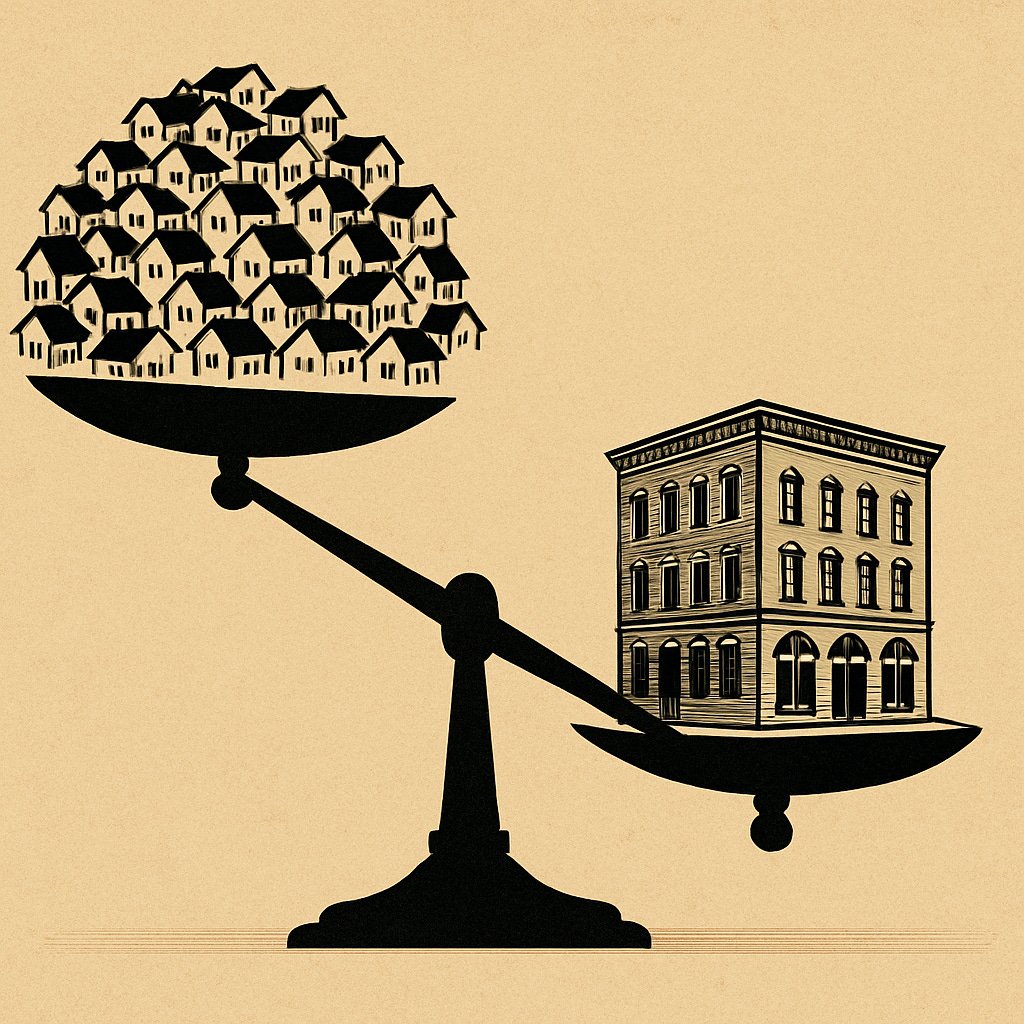
The problem is that our growth has tilted heavily toward residential development, and large, tax-exempt organizations occupy large parcels of land in our city. This means our tax base—the engine that pays for services—is not keeping pace with the service demands created by new growth.
This isn’t a call for automatic, painful tax hikes on homeowners. It’s a call to get ahead of the problem with a more intelligent, more balanced, and fairer revenue mix. We can still protect homeowners by broadening who contributes and how they contribute. The playbook is clear:
Advertisement
Pair Growth with Revenue: We must ensure new development pays for itself. This means using targeted impact and utility fees calibrated to the actual infrastructure load new projects create.
Focus on Revenue-Positive Land Use: The easiest way to fund services is to approve projects that generate more in revenue than they cost. This means prioritizing infill development, mixed-use projects, and job-producing commercial properties where infrastructure already exists.
Capture Partnership Dollars: We must proactively seek voluntary PILOTs (Payment In Lieu of Taxes) from large tax-exempt landholders. We should also pursue public-private cost-sharing on new roads and greenways.
Run a Tighter Ship: We must get more out of every dollar we already have. This means synchronizing capital projects to avoid digging up the same street twice, adopting a “fix-it-first” maintenance policy, digitizing processes to cut red tape, and measuring the outcomes of our spending.
The alternative is to do nothing and slide into a structural deficit, where we are forced to defer maintenance, cut services, or pass significant tax hikes. That future isn’t inevitable. It’s a policy choice. It’s time to choose balance.
Wake Forest Matters is an independent, nonpartisan newsroom covering Wake Forest, NC. We report on local government, schools, business, and community life — free to read and reader-supported. Fearless. Local. Loud.