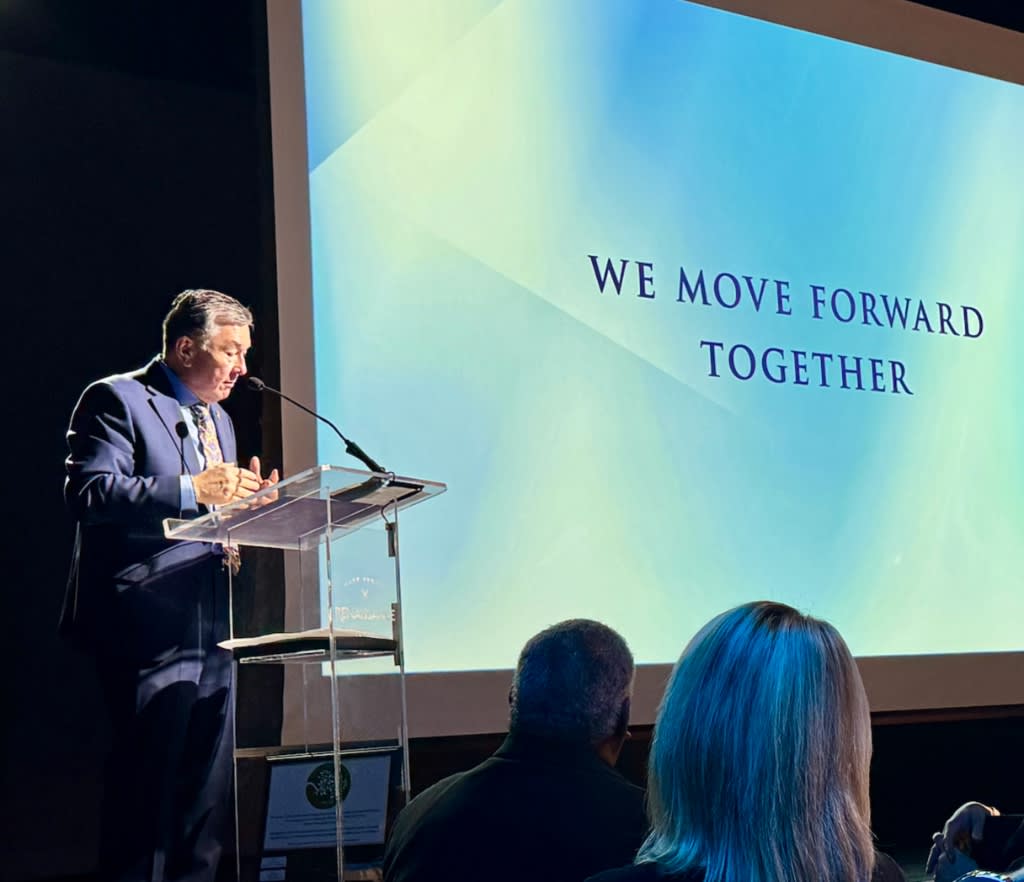
I was born and raised in Wake Forest. My family has called this land home since before there was a Wake Forest to be born in.
Calvin Jones, a physician from Massachusetts, purchased the 615-acre tract in 1821 that he named “Wake Forest.” He built the plantation that became this town. In 1832 he sold it to the Baptist State Convention, which opened Wake Forest Institute two years later. That is how this place got its name.
My family was here a century before he arrived.
The first Baker on this continent stepped off a ship in Virginia in 1631. For a century the family spread through the Tidewater and into northeastern North Carolina, following the rivers inland the way settlers did. They came into this region drawn by the Granville Grants, the colonial land grants that opened the northern half of North Carolina to settlement after one of the original Lord Proprietors of Carolina refused to sell his share back to the Crown. The land that became Bute County, Franklin County, and this corner of Wake County was Granville District land. My people came for it. They settled it. They have not left.
Advertisement
Before this town. Before this county. Before North Carolina was a state and before the United States was a country.
My ancestors helped found the Bute County Committee of Safety in 1775. Bute County is what Franklin and Warren County were before the Revolution was won. The Committee of Safety was the first revolutionary government in this region, organized before the Declaration of Independence was signed, by men who were already willing to put everything on the line to replace a government that ruled without accountability to the people it governed.
Just a few miles north of town, outside Youngsville, there is a small family cemetery. In it lie those men.
My people.
They didn’t fight for a slogan. They fought for a principle: that free people have the right to know what is done in their name, that power exercised without accountability is tyranny regardless of the title on the door, and that every generation inherits both the gift of self-governance and the obligation to defend it.
“Sunlight Is Said to Be the Best of Disinfectants”
In 1913, before he ever sat on the Supreme Court, Louis Brandeis was writing about banks. About money that moved through hidden fees and back-channel arrangements, money that belonged to ordinary people and was being managed, in the dark, by powerful institutions that preferred it that way.
“Publicity is justly commended as a remedy for social and industrial diseases. Sunlight is said to be the best of disinfectants; electric light the most efficient policeman.”
He was not writing about government in the abstract. He was writing about money. About who holds it, who moves it, and what happens when the public cannot see any of it.
More than a century later, nothing about that has changed.
Wake Forest has grown from 7,500 people to more than 65,000 since 1993. That’s the last time this town’s charter was updated. We are building infrastructure, approving contracts, disbursing public funds, and making decisions that will define the next 30 years of this community’s life. All of it under a governance framework designed for a small town that no longer exists.
We are on track to double again. 130,000 people, probably within the next 15 to 20 years.
That is not a small town. That is a small city. And small cities cannot run on the informal accountability that made small towns work. You cannot count on reputation traveling fast enough on foot when tens of thousands of new residents arrive each decade with no prior relationship to the institutions managing their tax dollars.
At that scale, accountability is not ambient. It has to be built, defended, and fought for.
The Currency of Democracy
Thomas Jefferson was not subtle about this. Writing to a friend in January 1787, he put it plainly: “Were it left to me to decide whether we should have a government without newspapers, or newspapers without a government, I should not hesitate a moment to prefer the latter.”
He wasn’t being rhetorical. Without real information, not the sanitized summary, not the redacted copy, not the press release, self-governance is counterfeit. A community can hold elections and file annual reports and technically comply with every open government law on the books while keeping the public functionally blind to what is actually happening.
Patrick Henry named the stakes directly in his speech to the Virginia Ratifying Convention on June 9, 1788: “The liberties of a people never were, nor ever will be, secure, when the transactions of their rulers may be concealed from them.”
He was talking about kings and colonial governors. The principle travels. It applies to town commissioners and county agencies and every nonprofit and civic organization that draws public funding and answers, in theory, to the people it serves.
Accountability doesn’t stop at the municipal building. It follows the dollar.
Follow the Money
I know what it looks like when money moves in the dark.
I spent ten years in the United States Navy. I ran combat operations in Iraq. I flew reconnaissance over the Sahara targeting Al Qaeda and affiliated organizations. I conducted strategic reconnaissance against this nation’s peer adversaries.
After the Navy, I went back. As a defense contractor embedded with joint interagency task forces in Afghanistan and Iraq, I helped target transnational terrorist networks. I tracked the financial architecture of organizations built to kill Americans and destabilize governments. I advised elected representatives at the highest levels of this country on what I found.
For years, my job was to follow money, people, weapons, and networks of influence. To find the flows that were meant to be invisible. To follow the thread until it led somewhere and then tell the people who needed to know what was at the other end.
The mechanics are not as different as you might expect. Money that should not move the way it moves. Funds that disappear between the account and the stated purpose. Relationships that explain transactions that otherwise make no sense. The signature of concealment is the same whether the address is a compound in Mosul or a line item in a municipal budget.
I know what it looks like.
That is exactly why I am looking here.
Growth doesn’t just bring people. It brings capital.
Private developers have been pouring money into Wake Forest for years. That pace is not slowing. But the more consequential shift may be what is coming from the public side.
In December 2023, NCDOT received a $1.09 billion federal grant, the largest in the agency’s history, to design and construct the first segment of the S-Line passenger rail corridor from Raleigh to Wake Forest. In January 2025, Wake Forest secured an additional $13.2 million federal grant to build a mobility hub at the planned rail station on White Street, where passengers will connect to rail, bus, walking, biking, and ride-share. Groundbreaking has already happened. Rail service is planned by 2030.
More than one billion dollars in public investment flowing directly into this town.
The S-Line will not just bring trains. It will bring transit-oriented development, new commercial corridors, land speculation, infrastructure contracts, and a wave of downstream spending that will reshape Wake Forest’s west side and its downtown in ways most residents have not yet fully reckoned with. That kind of money does not arrive quietly. It does not move without people making decisions, awarding contracts, and choosing winners and losers. Much of that will happen far from public view if no one is paying attention.
But the need for transparency does not begin and end with a billion-dollar rail project.
At the other end of the ledger, this town writes checks to civic organizations, chambers, nonprofits, and local institutions through membership dues, sponsorships, and community support grants. Thousands of dollars at a time. Line items approved in a consent agenda without a second glance. The kind of spending that never generates a headline.
Adlai Stevenson, the governor who won Illinois by running against a corrupt state administration and later served as Kennedy’s Ambassador to the United Nations through the Cuban Missile Crisis, put it plainly in a 1952 speech in Albuquerque: “Those who corrupt the public mind are just as evil as those who steal from the public purse.”
He was right about both.
Every one of those dollars deserves the same scrutiny as every dollar in the S-Line. Not because every expenditure is suspect. Because accountability is not tiered by amount. Public money is public money whether it is $1.09 billion or $1,090.
Follow the money. All of it.
What Investigative Journalism Actually Is
It is not headlines. It is not traffic. It is not the comfortable recitation of what was handed to you in a press release.
Investigative journalism is the stubborn, unglamorous, often thankless work of following a thread until it leads somewhere. Then reporting what you find, accurately, without fear, regardless of who it implicates. It is the check on power that elected bodies cannot provide for themselves, because no institution, anywhere, effectively investigates its own conduct.
President Kennedy, in his April 27, 1961 address to the American Newspaper Publishers Association, said “the very word ‘secrecy’ is repugnant in a free and open society.” He was right. And the impulse he named hasn’t gone anywhere. It shows up in agencies that run out the clock on public records requests. It shows up in meetings that technically comply with open government laws while revealing as little as possible. It shows up whenever a public institution treats accountability as a threat rather than a responsibility.
Sunlight doesn’t just expose problems. It prevents them. The discipline of transparency makes institutions better at their jobs. Officials who know the records will be read are more careful about what they put in them.
That is not a punishment. That is good governance.
The Law Is on Your Side
This is not just principle. It is statute.
North Carolina General Statute § 132-1 defines public records in the broadest possible terms: every document, paper, letter, map, photograph, recording, and electronic record made or received in connection with the transaction of public business by any agency of North Carolina government or its subdivisions. The law then states something that every resident of this town should know by heart: “The public records and public information compiled by the agencies of North Carolina government or its subdivisions are the property of the people.”
Not the property of the agency. Not the property of the officials who created them. Not the property of the attorneys who now manage access to them.
The property of the people.
The same statute bars any political subdivision of this state from entering into a nondisclosure agreement to restrict access to public records. The law does not build in a carve-out for inconvenience or embarrassment. It does not yield because releasing records might be awkward for the institution holding them. It is the floor, not the ceiling, of what this community is entitled to know.
For those inside institutions who see something that should not be happening: North Carolina law protects you. N.C. Gen. Stat. § 126-84 through 126-88 is the state’s Whistleblower Protection Act, formally titled “Protection for Reporting Improper Government Activities.” It is the policy of this state, written into law, that employees shall be encouraged to report violations of law, fraud, misappropriation of public resources, and gross mismanagement. Retaliation against an employee who reports wrongdoing is prohibited. Willful violations carry treble damages plus attorney fees.
If you know something. If you have seen something. If you have documents that the public deserves to see. The law does not require you to stay silent. And Wake Forest Matters does not require you to put your name on it.
Use our secure tip line or email us directly at tips@wakeforestmatters.com. Everything is confidential. Your identity is protected.
North Carolina’s shield law, G.S. § 8-53.11, gives journalists in this state a qualified privilege to protect sources and unpublished material. The state constitution goes further: Article I, Section 14 states that freedom of speech and of the press “are two of the great bulwarks of liberty and therefore shall never be restrained.” This protection has been upheld in North Carolina courts going back to State v. Rogers in 1983, when a Wake County Superior Court judge quashed a subpoena issued to a Raleigh News & Observer reporter, citing the First Amendment.
Wake County. Forty years ago. The principle has not changed.
And at the federal level, the Supreme Court set the standard for press coverage of public officials in New York Times Co. v. Sullivan (1964): public officials must prove actual malice to prevail in a defamation case, a standard deliberately designed to protect aggressive, accountability-driven journalism from being silenced by legal intimidation.
These are not abstract protections. They are the legal architecture that makes this work possible. Know them. Use them.
Where It Always Starts
We are living through something. Most people feel it even when they struggle to name it.
Authoritarian creep. Extreme nationalism. The methodical erosion of the institutions built to ensure that no single person, faction, or party holds unchecked power. This is not happening somewhere else. It is happening at every level of American civic life, and the history of how democracies collapse tells us exactly where it begins.
Not at the top.
At the bottom.
I spent four years as a Senior Research Specialist at Princeton University’s Bridging Divides Initiative. Our work was building early warning systems for political violence in American communities. Tracking threats and hostility against local officials. Identifying the signatures of democratic stress before they became democratic failure. What I learned at Princeton confirmed what I already knew from the Navy and from years in the field overseas: the rot announces itself early, at the local level, in small decisions made by small institutions that believe no one is watching.
They are always wrong about that.
I have worked in places where democratic institutions failed. Where the decay that started with unanswered questions and small corruptions ended in collapsed governance and real violence. I know what those early warning signs look like in the field. The signals that were blaring sirens in Kandahar and Baghdad are flickering here in Wake Forest. Different scale. Different language. The same signal.
That is not hyperbole. That is pattern recognition. And it is exactly why I am here.
Montesquieu, the French philosopher whose framework for the separation of powers shaped the Constitution our Founders wrote, was precise about this in The Spirit of the Laws (1748): “The deterioration of a government begins almost always by the decay of its principles.”
Not the decay of its laws. Its principles. The quiet decision to look the other way. The institutional reflex to close ranks rather than answer questions. The public records request that gets declined. The check that was written and never examined. The money that moved and was never followed.
Advertisement
That is where the rot starts. That is where it has always started.
Yale historian Timothy Snyder spent his career studying how democracies break down. In On Tyranny: Twenty Lessons from the Twentieth Century (2017), he connected the act of investigation directly to the prevention of tyranny: “The individual who investigates is also the citizen who builds. The leader who dislikes the investigators is a potential tyrant.”
Read that twice.
A closed government does not just hide wrongdoing. It teaches citizens to stop asking.
The refusal to be scrutinized is not a neutral act. It is a signal. The instinct to resist accountability, to delay, to obstruct, to invoke procedural shields against legitimate public inquiry: that instinct lives at every level of government and in every civic institution that handles public money. Allowed to grow, it produces exactly the condition Snyder is describing.
Hannah Arendt, who understood this better than almost anyone who has ever written about it, said in a 1973 interview published in The New York Review of Books: “The moment we no longer have a free press, anything can happen.”
Anything.
We are not drawing straight lines between local institutional failures and national democratic collapse. That is not journalism. But we are in the business of noticing when institutions at any level treat accountability as a threat. When the people who hold public trust respond to legitimate scrutiny with obstruction rather than transparency. When the decay of principles, however small the dollar amount, however local the address, is allowed to proceed in the dark.
That pattern is worth naming.
Naming it is exactly what we are here to do.
Democracy Dies in Darkness
You may have seen that phrase on a Washington Post masthead. That was a business decision. And in recent years, that same newspaper has done considerable work to undermine its own slogan.
The phrase belongs somewhere older.
It has been in circulation for decades, carried forward by journalists who believed it long before any newspaper made it a slogan. Bob Woodward invoked it in the context of Nixon and Watergate. Its true lineage runs further back still: to the constitutional tradition, to the Founders who wrote the First Amendment with full intent behind every word, and to the people who bought what it stands for with their lives.
I don’t need to borrow it from a newspaper.
The men in my family cemetery outside Youngsville were organizing revolutionary government in Bute County before this nation existed. They earned it.
As Supreme Court Justice Hugo Black wrote in his concurrence in New York Times Co. v. United States (1971), the Pentagon Papers case: “The press was protected so that it could bare the secrets of government and inform the people.” Not to embarrass. Not to destroy.
To inform.
That is the mission.
What We Owe This Town
People ask why someone with my background is running a local news outlet in a fast-growing town in North Carolina.
The honest answer is that this is the same work.
The methodology is identical. Follow the money. Find the flows that are meant to be invisible. Map the relationships that explain the transactions that otherwise make no sense. Read the concealment. Tell the people who need to know what is at the other end of the thread.
Now I do it here. In Wake Forest. For this community.
But the real answer runs deeper than methodology.
My grandfathers served this nation in World War II. They fought to lift the veil of tyranny from the world so that democracy would survive. So that a free people would be able to govern themselves. They came home. They built lives. They passed something forward.
My father carried those lessons and passed them to me. He quoted John 8:32 throughout my life: the words of Jesus, “The truth shall set you free.” He also taught me something that required no chapter and verse at all.
Stealing is wrong.
It does not matter who you steal from. It does not matter how much. It does not matter what it is called or how it is arranged on paper. Wrong is wrong. My father taught me that. I have not forgotten it.
I served. I did my thing.
Now I am doing this.
Because the legacy I have to uphold runs deep, and it is bigger than any individual. Bigger than any ego. Bigger than any single story, any single decision, or any single government. The men in that cemetery outside Youngsville did not fight for Wake Forest Matters. They fought for the principle that makes Wake Forest Matters possible. My grandfathers did not go to war for a newspaper. They went to war so that a free press could exist in a country worth defending.
That is the weight of this work. I do not carry it lightly.
The republic stands because those who went before stood for it. Every generation owes the next the same thing: the truth, plainly told, about how power is used in their name.
Not because the stakes are the same. They are not. But because the signals are. Because I have seen what happens when the early warnings go unheeded. When institutions decide they do not owe the public an accounting. When the money moves and no one follows it. When the rot is allowed to deepen because no one was watching, or because those who were watching were told to look away.
I have seen what that produces at scale overseas.
I am not willing to watch it take root here.
Wake Forest is at an inflection point. The decisions being made right now, about land use and public money, about contracts and priorities, about which public agencies and nonprofits hold taxpayer dollars and whether they spend them as promised, will shape this community for a generation. Not the next four years. A generation.
New residents arriving here deserve to understand those decisions. Long-time residents deserve to see their trust honored. And the officials managing this growth deserve the discipline that public scrutiny provides. No one governs better in the dark than in the light.
Walter Cronkite, the most trusted voice in American broadcast journalism, put it plainly: “Freedom of the press is not just important to democracy, it is democracy.”
We believe that. We act on it.
Wake Forest Matters exists because this town’s growth demands more accountability journalism, not less. More questions asked. More documents read. More of the machinery of local government made visible to the people who fund it and live under it.
This community is changing fast. The standards we hold it to have to keep pace.
Sunlight is not a brand. It is what we owe the men in that cemetery outside Youngsville who were building revolutionary government before this country existed, and every resident of this town who deserves to know what is being done in their name.
We are turning on the lights.
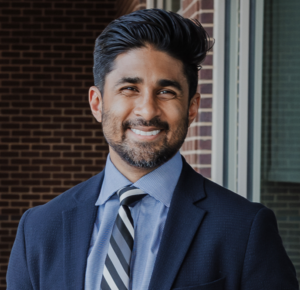
Tom Baker IV is the Founder and Publisher of Wake Forest Matters. Read his full biography here.
Tom Baker IV is the publisher of Wake Forest Matters, Wake Forest's only independent local newsroom. A Wake Forest native, Navy veteran, and intelligence professional, Tom launched Wake Forest Matters to bring serious accountability journalism to his hometown. Tips and story ideas: publisher@wakeforestmatters.com